
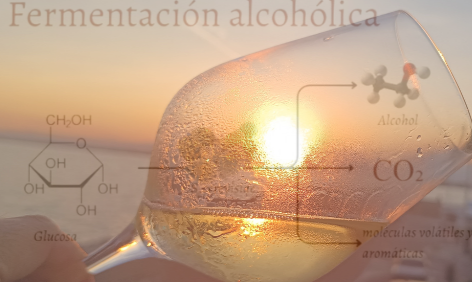
Wine is a living solution, a natural laboratory where sugar has been transformed into alcohol, acids are balanced, aromas evolve, and colors mature. Each glass is a lesson in sensory chemistry.
In wine, ethanol is the most abundant substance after water. It all begins with alcoholic fermentation, a microscopic dance between sugar and yeast (Saccharomyces cerevisiae).
The equation for this magic is: C6 H12 O6 →2 C2 H5 OH+2 CO2
Yeast converts sugar into alcohol, specifically ethanol and carbon dioxide, releasing organic acids, residual sugars, polyphenols, amino acids, and aromatic molecules. This minority fraction is responsible for the structure, color, stability, and sensory profile of each wine and explains why each bottle is unique.
After alcoholic fermentation, lactic acid bacteria (Oenococcus oeni) come into play, transforming malic acid into lactic acid, which is rounder and smoother. The result is a more pleasant wine, with notes of butter or cream, due to the presence of diacetyl.
Polyphenols are the artists of wine. They are found mainly in the skins, seeds, and oak wood, and determine the color, astringency, and aging potential.
Anthocyanins are pigments responsible for the red color, which varies depending on the pH. If it is low, it gives bright red tones, while if it is high, it gives bluish tones.
Tannins, on the other hand, are phenolic polymers that combine with proteins in saliva, causing a sensation of dryness or astringency. During aging, they polymerize, becoming softer and more rounded.
The bouquet of wine comes from hundreds of volatile compounds that evolve over time. In oak barrels, chemistry becomes perfumery, with lignin and hemicellulose degrading due to the heat of toasting, releasing vanillin (vanilla aroma) and furfural (toasted almond).
Wine is not just culture, it is sensory chemistry. Fermentation transforms sugar into alcohol; malolactic fermentation converts aggressive acidity into smoothness; polyphenols color, structure, and protect; and aromas emerge, evolve, and transform with age. Each bottle contains the work of millions of molecules in perfect harmony. Science explains the process; the pleasure begins when we drink.