On occasion I have heard that Sicily, more than an island, is a continent. I spent a month of August touring it from one end to the other and I couldn’t agree more. The largest island in the Mediterranean is a hectic cocktail of life so varied that it is difficult to list its ingredients. Geographically and demographically, it has a complexity that must be experienced in order to understand it, if this is really possible.
Due to its location in the Mediterranean, a good number of civilizations have left their mark, endowing it with a culture and tradition that is breathed in each of its corners. This cultural movement has been reflected in all areas of life, including, as it could not be otherwise, the world of wine.
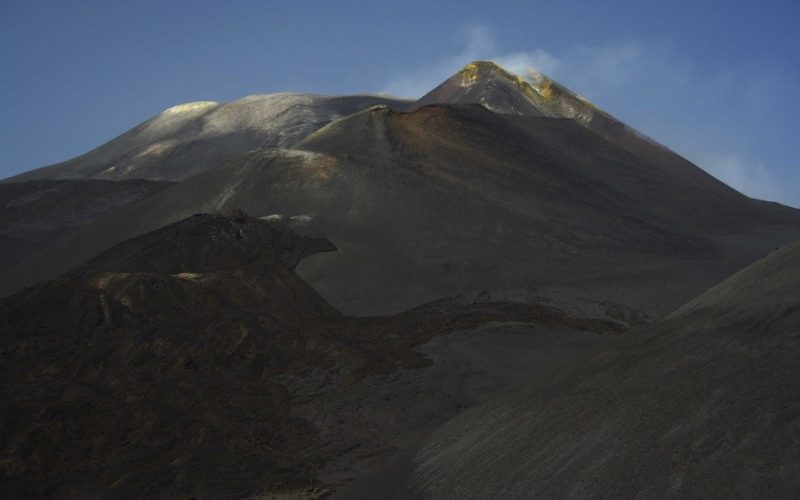
The conditions for the development of viticulture have always been exceptional: sun, heat, low rainfall, steep slopes, poor soils, even largely volcanic (not all the soils on the island where viticulture is practiced are volcanic). . Etna, as a wine area, is different from the rest. Its soils are so varied (sand, clay, ash and lava from different eruptions) that they give the wines their own stamp. The climate also differs from the rest of the island, with drastic temperature differences between day and night.
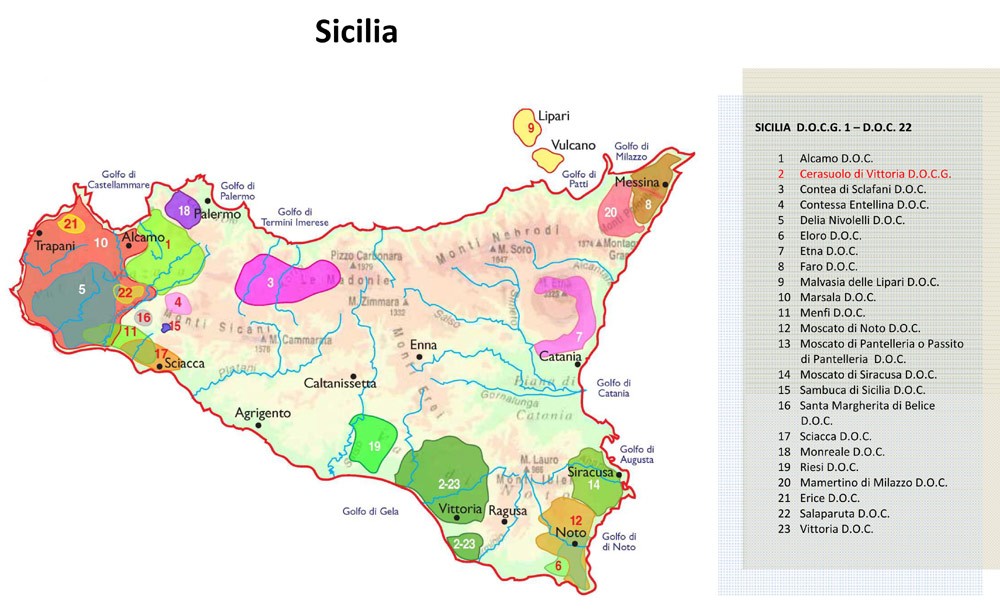
In the more than twenty-five thousand square kilometers that the island has, we find a DOGC, Cerasuolo de la Vittoria, in which the frappato red variety stands out. In addition, there are twenty-two DOCs in which red, white, sweet and fortified wines coexist, produced from different grape varieties.
In the Vittoria DOC, white wines made with the Inzolia variety stand out, while in the Eloro DOC there are frappato, nero d’Avola and pignatello reds, as well as in the Siracusa DOC and the Noto DOC. It goes without saying that, in Catania, the DOC Etna, with the varieties of nerello mascalese and nero dÁvola, has great weight, in large part, due to its volcanic point. In Messina, there is the DOC Faro, one of the first in Sicily, in which the vines nerello mascalese, nerello cappuccio and nocera stand out. In the DOC Lipari (Aeolian Islands), Malvasia is a religion. In the province of Palermo we have the DOC Contea di Sclafani and the DOC Contessa Entellina. In Agrigento, the Sciacca DOC, the Sambuca di Sicilia DOC and the Santa Margherita di Belice DOC. In the province of Caltanissetta, the DOC Riesi. For its part, the province of Trapani represents more than half of the vineyard area and wine production in Sicily. The DOC Marsala gives its name to the well-known marsalas, generous wines made with the Inzolia and Damaschino varieties for the golden and amber Marsala and perricone or pingnatello, nero d’Avola, nerello mascalese for the ruby Marsala. The Muscatel variety is extremely widespread throughout the island, especially that of Pantelleria, under the DOC Moscato di Pantelleria.
As we can see, the infinity of grape varieties and wine-growing areas, together with the peculiarities of the soil, climate and terroir, makes us understand why Sicily, also in the world of wine, is a continent.